


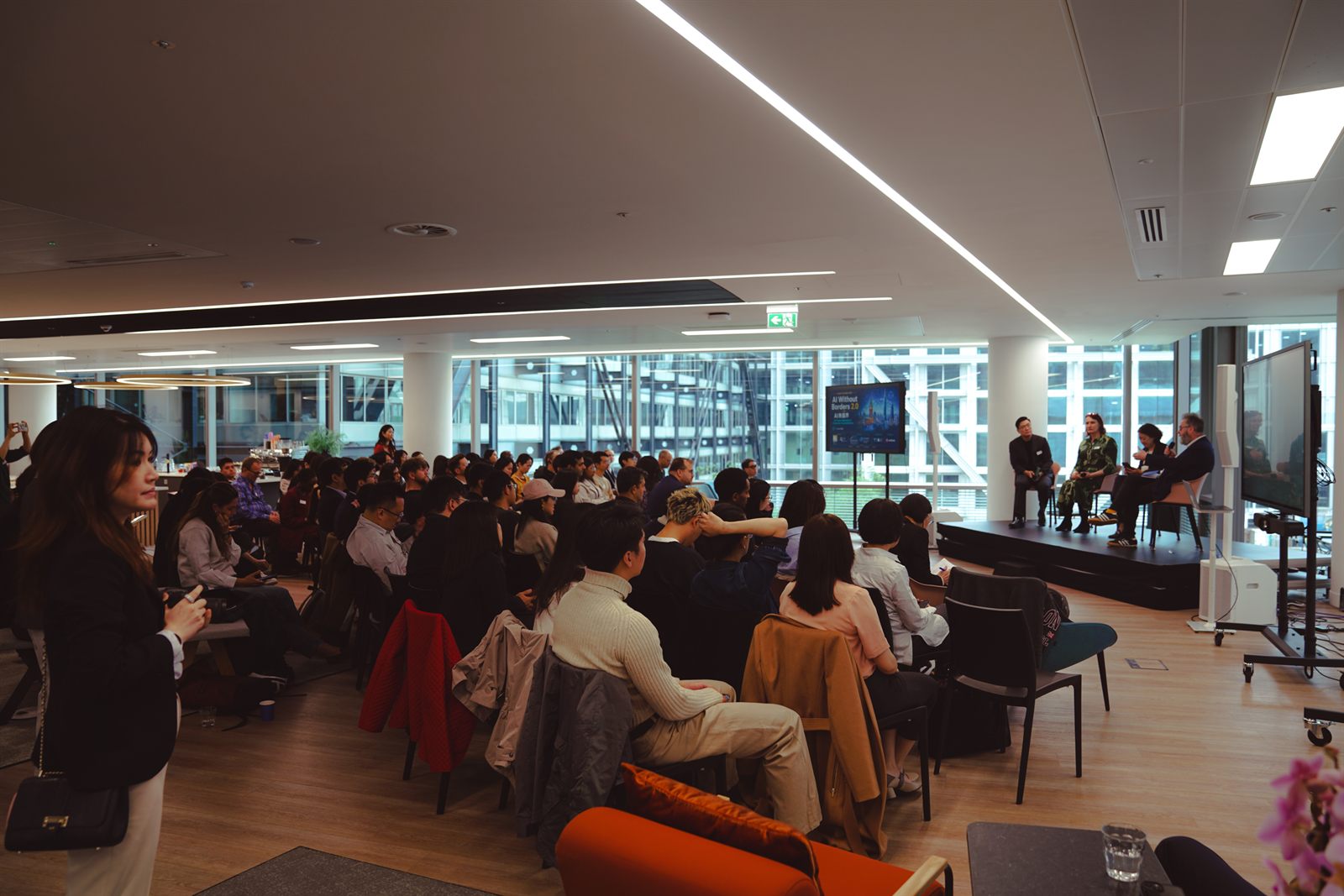
There is a question that sits underneath almost every AI conversation happening in government, industry and the lab right now: how do you build artificial intelligence that people can actually trust? At AI Without Borders 2.0, we put that question to two democracies who have answered it very differently, and found that the distance between their answers is exactly where the most useful thinking lives.
Taiwan has taken a legislative route, passing its AI Basic Act. The UK has bet on industry-led standards and assurance. Same destination, different design. Over the course of the morning, that contrast moved from the keynote stage through two panels and into the pitches of founders building trustworthy AI as a product.
Sovereignty as strategy
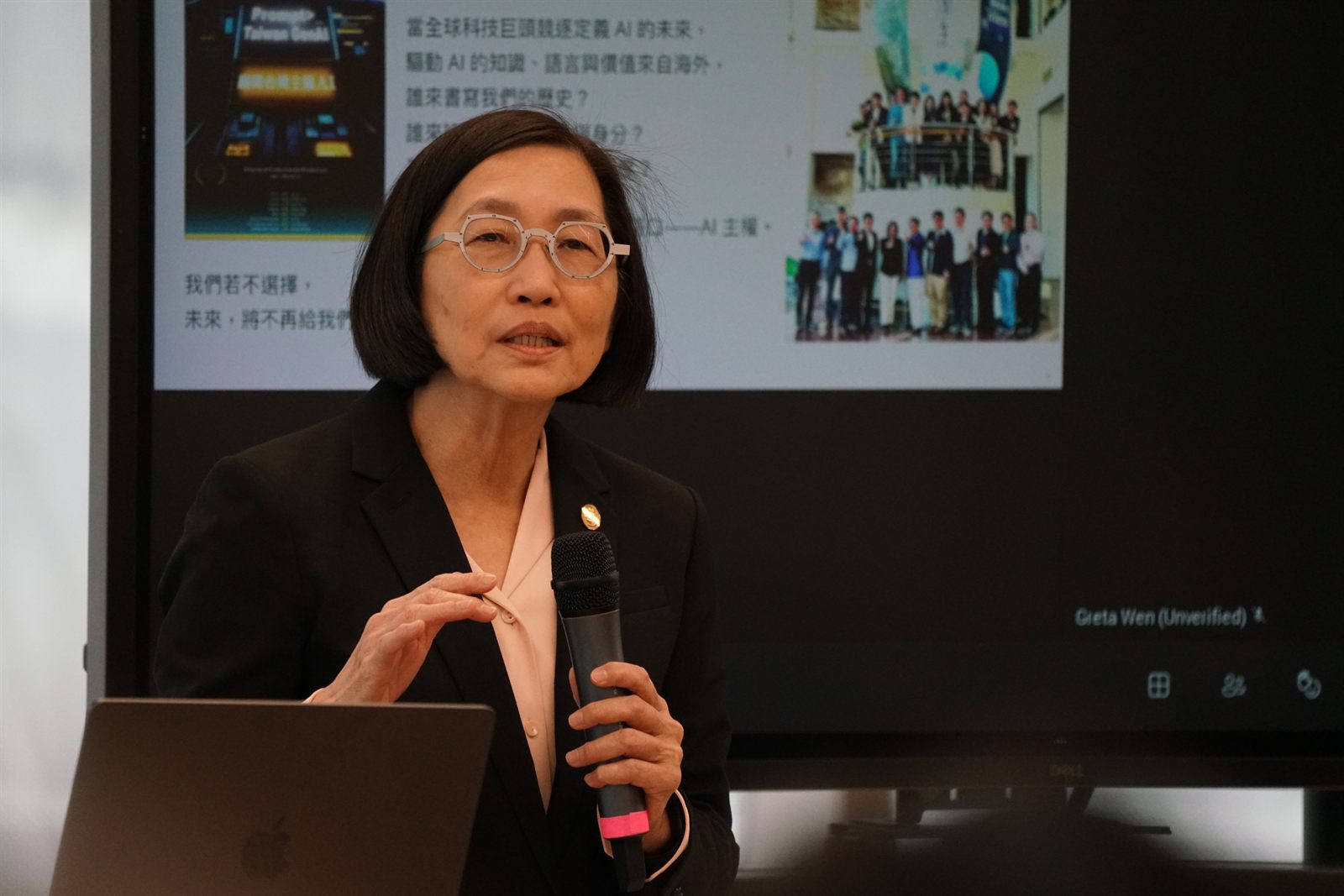
The morning opened with Professor Jane Yung-jen Hsu, Chair of the Taiwan AI Center of Excellence, who set out why AI has become, in her words, national critical infrastructure rather than simply a business tool. Taiwan holds more than 90% of the global market in advanced AI chips and AI servers, a position she described as “nothing short of a miracle” for such a small country, and one Taiwan now wants to build upward from, climbing the stack from chips to servers to software to applications.
Her organising idea was sovereign AI, framed across four pillars: data, model, compute and infrastructure sovereignty. Crucially, she defined sovereignty not as owning everything alone but as retaining enough control and autonomy to stay a critical core ingredient in the global ecosystem, and to keep good partners. One proof point: a small team, working with only around 100 V100s and later 72 H100 GPUs, trained an eight-billion-parameter model on curated Traditional Chinese data that rivals far larger systems, and embedded Taiwan's democratic values in the corpus while doing it.
Two paths to trustworthy AI
If the keynote framed the stakes, the first panel made the central argument explicit. Moderated by our own YJ Chen, it set the UK's standards-led approach beside Taiwan's new legislation.
Professor Ching-Yi Liu described Taiwan’s AI Basic Act as a government-centric umbrella framework: principle-based, deliberately abstract, and notable for putting the dignity and economic security of workers among the government’s first priorities, a mandate she argued is largely missing from the UK and EU. Maya Carlyle of the National Physical Laboratory countered with the UK’s measurement-first philosophy, capturing today’s governance gap with the morning’s most quoted line: AI assurance right now is “a microwave without a dial.” John Spindler of Twin Path Ventures pressed the empiricist case, “don’t legislate until you know,” and Greta Wen of the AI Foundation Taiwan grounded it all in data, noting that adoption is rising fast but that talent and messy data remain the real barriers.
Technology in service of people
The second panel, moderated by Lin Kuan-yi of Taiwan’s National Science and Technology Council, turned from frameworks to people: aging societies, education, sustainability and inequality. The recurring phrase was human-centred AI, the idea, as Professor Cathy Weng of NTUST put it, that AI may replace certain tasks but should never replace the human relationship at the heart of education. Viola Jardon of the Cambridge Institute for Sustainability Leadership offered the morning’s sharpest commercial truth, that sustainability is not a product and solutions get adopted when they solve a real business problem, while investor Jeffrey Ng explained why so many promising pilots die in “pilot purgatory.”
Trust, built
The morning closed with founders turning theory into product: verifiable digital product passports, spatial AI for retail, a governance layer for agentic AI, production-grade voice AI, and agentic DevOps. As one founder put it, trust is not a promise you make once; it is something you operate every single day.
That is the thread that ran through the whole morning. AI without borders should mean that care, wisdom and opportunity travel across borders too, not just the technology. On the evidence of this session, the UK–Taiwan conversation is only getting started.
Tech London Advocates Taiwan connects the UK and Taiwan's technology ecosystems. AI Without Borders 2.0 was held in London.