


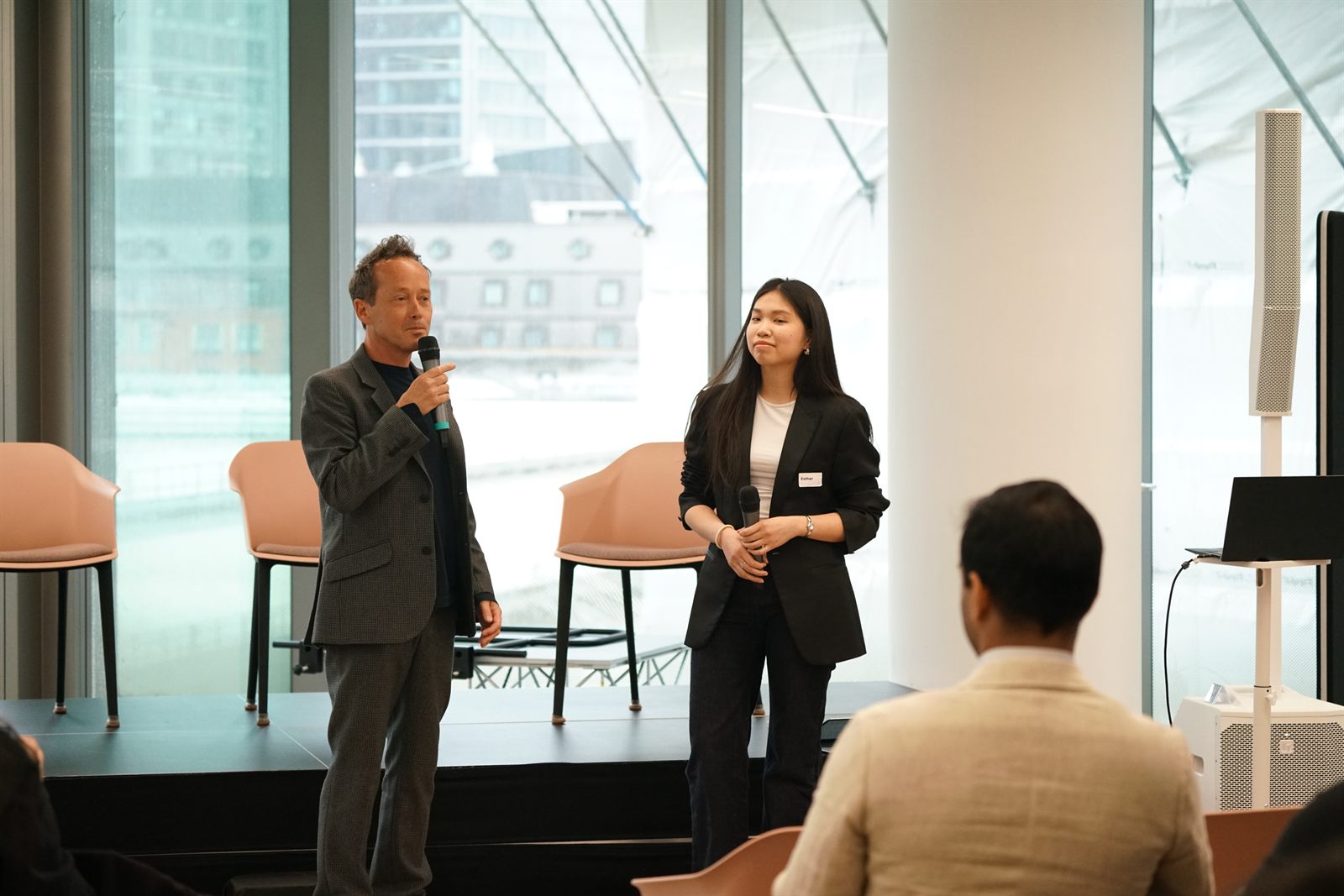
Panels can describe trustworthy AI. Startups have to ship it. The morning closed with a showcase of five companies building exactly that, and a reminder, from the founders themselves, that trust is not a promise you make once but something you operate every single day.
Turing Certs: proof you can hold
Ryan from Turing Certs (Turing Space Inc.) opened with verifiable digital product passports for the textile industry. Using AI to verify each product across around 271 data points, plus blockchain to mint a tamper-proof certificate, the platform lets anyone trace where and how a product was made and verify it in a fraction of a second. Built against the EU's Digital Product Passport framework and proven with a manufacturing partner, it is a concrete example of Taiwan's AI and blockchain capability meeting UK and EU sustainability regulation. The wider business turns certificates, licences and compliance evidence into machine-verifiable credentials on open global standards (W3C Verifiable Credentials, DIDs), with more than six million credentials issued across 40-plus government and institutional adoptions worldwide.
iStaging: the physical world, modelled
Represented by Esther Lee and the company’s EMEA director, Taipei-based iStaging makes spatial, or “physical,” AI for retail, real estate and luxury, counting brands such as Dior, Bvlgari, LVMH and Mercedes among its clients. Their pitch centred on bringing AI to the last frontier it has yet to fully cross, modelling real-world spaces (boutiques, malls, showrooms) with their geometry, navigation, products and human interactions, and layering AI concierge experiences on top. With over a million live tours created and a small global team, they are focused on growing in the UK, Europe and North America.
Speculum AI: the governance layer
Speculum AI, presenting its Mirror OS product, tackles accountability in production AI, what it calls governance infrastructure for agentic AI. Where most systems treat the AI runtime as a black box, Speculum governs decisions at the boundary, before, during and after execution, and generates regulator-grade evidence by default. Because it opens that box, it can produce audit-ready trails and full attribution for every AI transaction, without locking customers into a particular model. With AI governance among the hottest topics in venture right now, the company's bet is that the bottleneck has shifted from capability to dependable, accountable deployment.
Pathors: voice AI that feels human
Brandon, co-founder of Pathors, made the case with a live demonstration of silence. A car dealership’s voice AI took four seconds to answer, long enough that callers hang up or demand a human, sending the very work the AI was meant to absorb straight back to staff. Pathors cuts that to around one second, lifting call completion dramatically, and pairs it with production-grade monitoring that analyses every conversation, catches errors and turns them into training. Their framing: for voice AI, trust is an operation you run every day, not a demo you give once.
Zeabur: DevOps for the vibe-coding era
Closing the showcase, Ling Wu introduced Zeabur, an infrastructure layer for the agentic era, billed as “your AI DevOps engineer.” With AI now able to ship code in seconds, the team argues, the remaining gap is operations: deploying, running and monitoring all still take far too long. Zeabur’s answer is “vibe ops,” an agentic platform that connects whatever tool you build with, from Cursor to Claude Code to a simple chat interface, and handles DevOps tasks from a single prompt: rent a server, deploy a project, connect a database, schedule a backup.
Five companies, one through-line: each is trying to make AI dependable enough to belong in everyday work and life. It is the panels' question, how do you build AI people can trust, answered not in principle but in product.
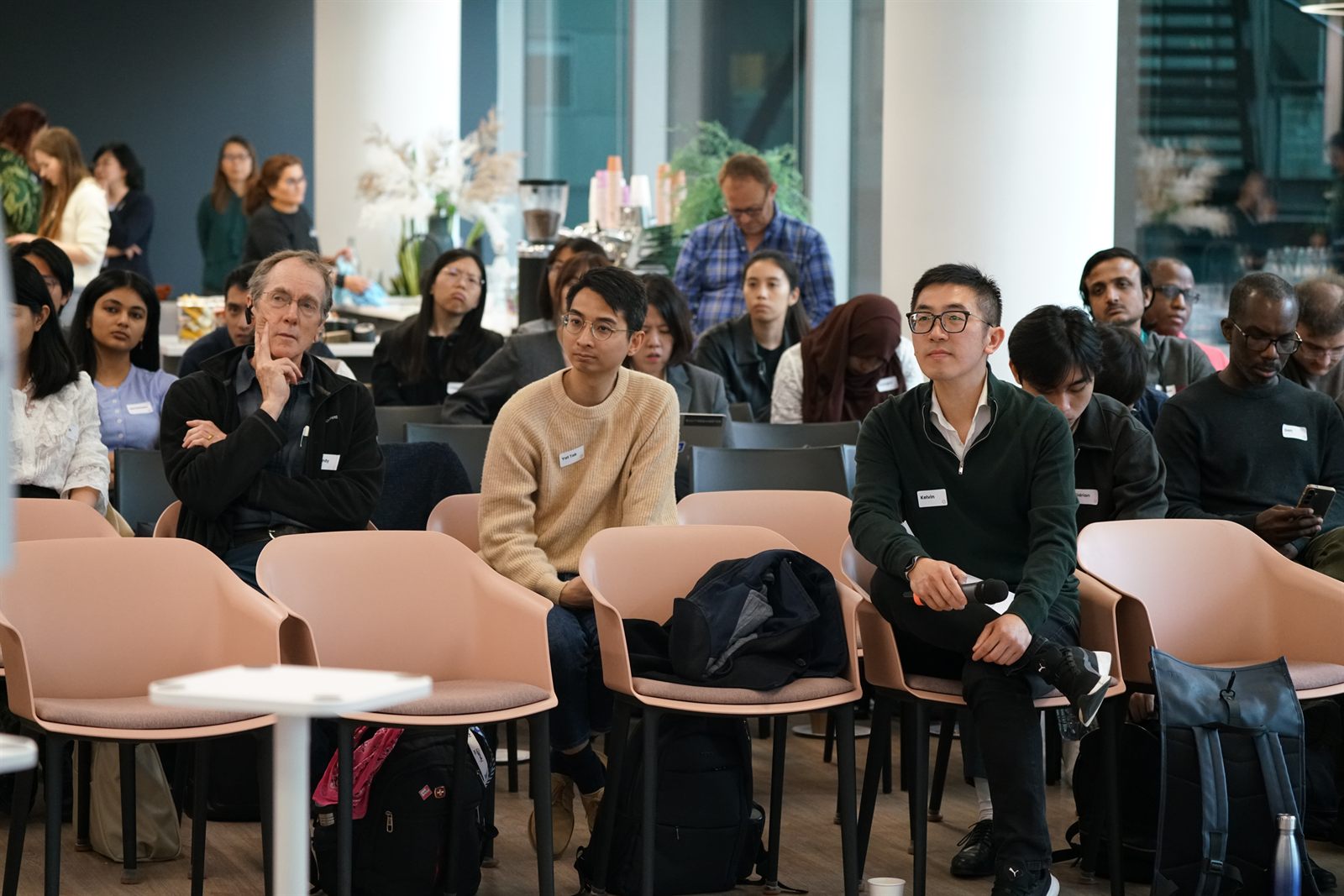
The startup showcase concluded the morning programme at AI Without Borders 2.0, hosted by Tech London Advocates Taiwan.