


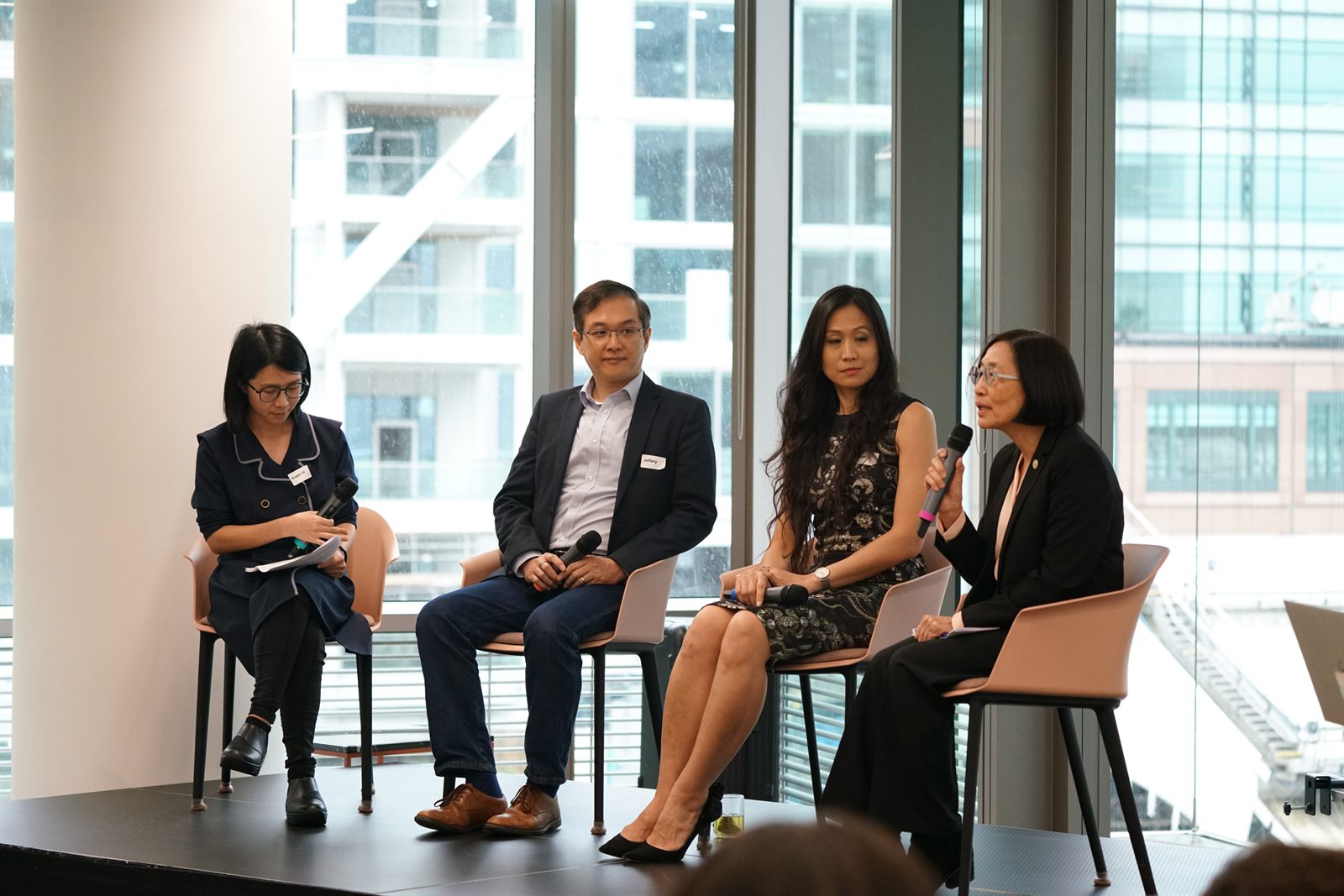
It is easy to talk about AI in the abstract, in pillars, frameworks and market share. The second panel of the morning, moderated by Lin Kuan-yi of Taiwan’s National Science and Technology Council, did something harder. It asked what all of this is for, and kept the conversation tethered to real people: the aging parent, the struggling student, the early-stage founder, the worker watching their job change shape.
Amplifier, not replacement
The clearest articulation came from Professor Cathy Weng of NTUST, whose work sits at the intersection of AI, inclusive education and community impact. AI, she argued, may replace certain tasks, but it should never replace the human relationship at the heart of education. A teacher notices the discouraged student, recognises the quiet one who has stopped participating, and knows when a learner needs a challenge and when they need reassurance. AI can generate an answer; a teacher helps a student believe the answer is possible.
Her warning was that AI is an amplifier, and amplifiers do not discriminate. It can amplify knowledge, creativity and access, but it can equally amplify existing inequalities. Students with confidence, strong strategies and digital literacy race ahead; students without support can become more dependent and more discouraged. The deeper question, she said, is not whether AI makes learning faster, but whether it helps build an education system in which more learners feel recognised and capable, which means designing from the edge, not only from the centre.
Sustainability is not a product
Viola Jardon of the Cambridge Institute for Sustainability Leadership brought a bracing commercial realism. The question she is asked most, what is the coolest AI solution on the market, is, she argued, the wrong one. The right question is what problem you are solving. Solutions get adopted, built into how a company or a supply chain actually operates, when they address a real business pain: mitigating risk, creating value, saving time or cost.
Sustainability on its own, she warned, is now a hard sell. The boom of five or ten years ago has given way to “innovation theatre,” pilots and events that never go far. What scales is a solution that manages its stakeholders, understands the system it sits in, and is honest about its trade-offs.
Pilot purgatory
Investor Jeffrey Ng explained why so much promising work stalls. Startups go after pilot after pilot, run a successful three or six months, and are then ghosted. The reason, he argued, is that founders win the primary user, the clinician, say, but neglect the economic buyer who holds the budget. And because large language models are stochastic, giving different answers to the same question on different days, the question of liability looms over every deployment: when it goes wrong, who is responsible? Adoption comes only when both the user and the buyer are engaged from the start.
Designing for the margins
On aging, a challenge both countries share, Professor Jane Yung-jen Hsu pointed to Taiwan’s national health insurance system and its cultural willingness to let AI ease the load on overstretched healthcare workers, alongside IoT devices that let elders age at home. It takes a village to care for the elderly, she suggested, and AI can help link that village together.
But Professor Cathy Weng returned the conversation to dignity. For many older adults, the barrier is not access to technology but the confidence to use it: the worry of pressing the wrong button, of a scam, of who to ask. Digital inclusion, she argued, is about dignity and trust as much as connectivity. Sometimes the most meaningful innovation is not a new platform but a patient person sitting beside someone and saying: take your time, let us learn this together.
That, in the end, was the panel’s shared conviction. The goal is not to replace the teacher, the carer or the colleague with a smart machine. It is to help people become more fully human, and to make sure that, as AI crosses borders, care and opportunity cross with it.
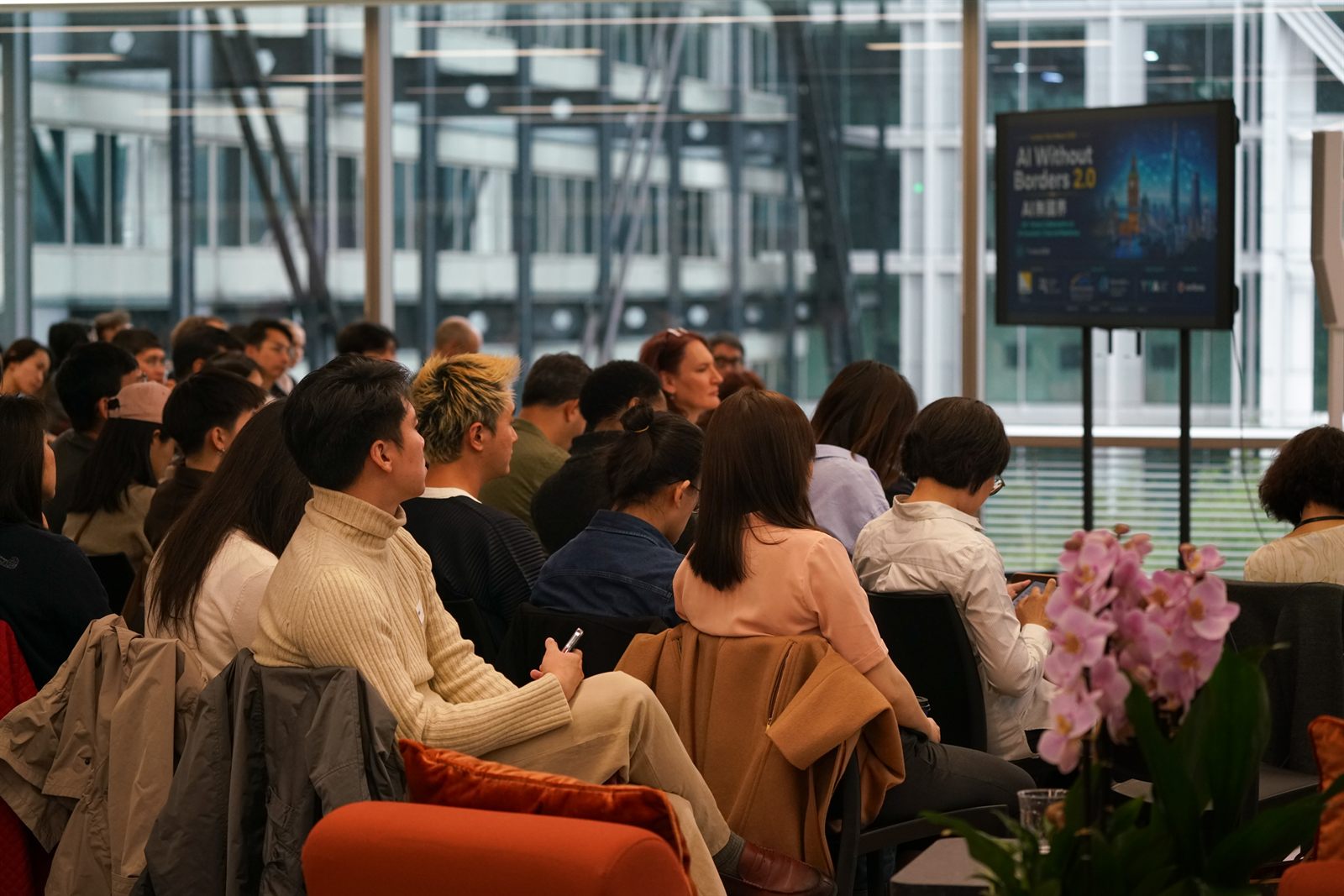
This piece reflects the discussion at Panel 2 of AI Without Borders 2.0, moderated by Lin Kuan-yi, hosted by Tech London Advocates Taiwan.