


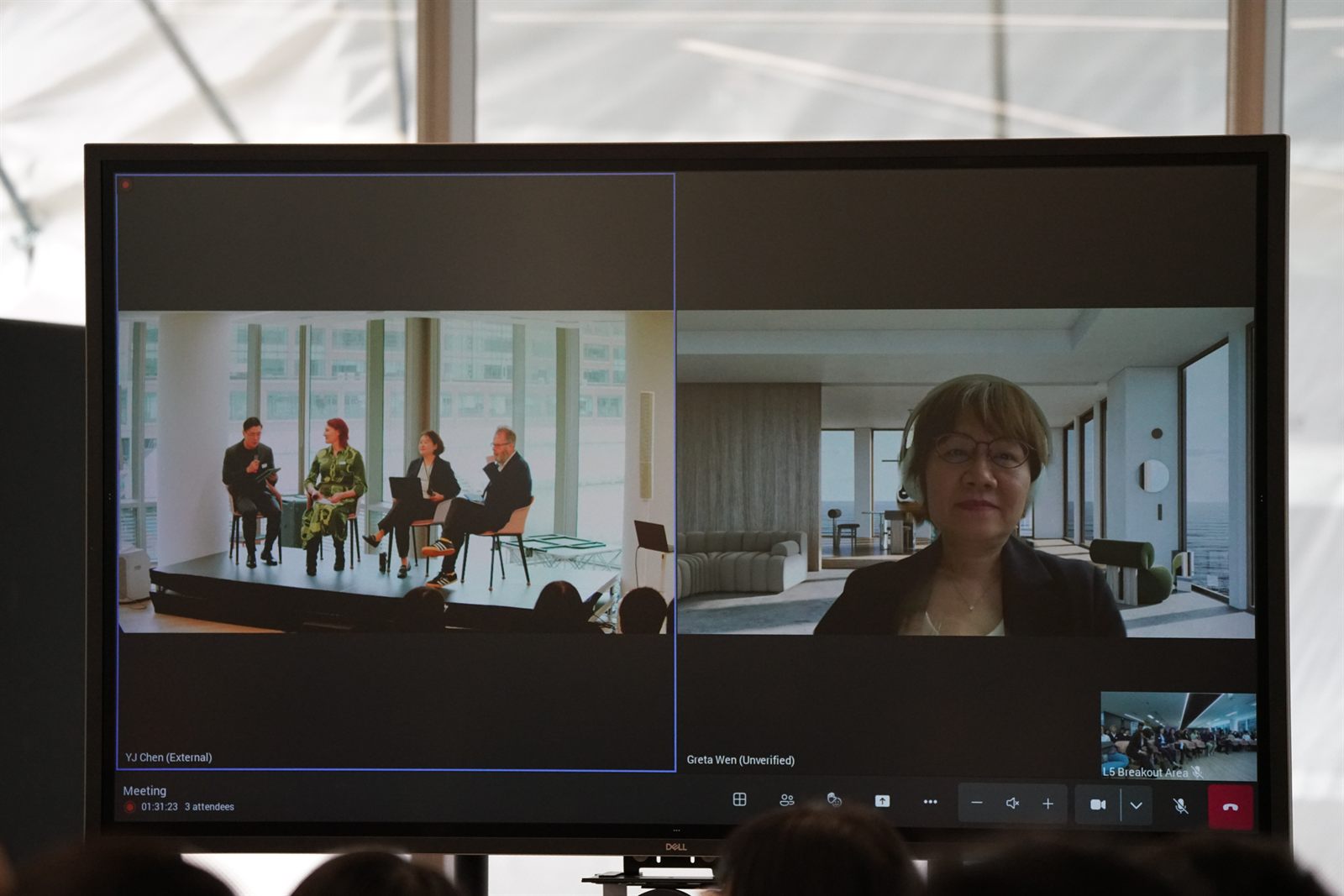
Ask two democracies how to make AI trustworthy and you might expect roughly the same answer. You would be wrong, and the gap is the point.
Taiwan has chosen legislation. The UK has chosen standards and assurance. Both are aiming at the same goal: AI that citizens, regulators and markets can rely on. But the design choices behind those two routes reveal genuinely different theories of how trust gets built, and of what each country risks getting wrong.
The case for writing it down
Professor Ching-Yi Liu, who sits where constitutional law, data governance and Taiwan's AI policy converge, described Taiwan's AI Basic Act, passed before Christmas last year, as something quite specific: a government-centric, principle-based umbrella framework. Rather than imposing the immediate operational obligations that the EU places on private enterprises, it requires individual sector regulators to issue tailored rules for the industries they oversee.
What makes it distinctive, she argued, is its starting point. The Act places the dignity and economic security of workers among the government’s first priorities in the face of rapid automation, mandating retraining, employment counselling and even subsidies to close the skills gap. That worker-first framing, she suggested, is largely absent from both the UK and the EU.
But Professor Liu was candid about the trade-offs. The Act is highly abstract, light on concrete compliance duties and supervisory mechanisms, and offers only limited guidance to regulators and businesses. Its great strength, adaptability in a fast-moving landscape, is also its great risk: it defers the hard questions to future rule-making, and it is not yet clear whether the designated authority has sufficient power to coordinate across government.
The case for measuring first
Maya Carlyle of the National Physical Laboratory, the UK's National Metrology Institute and recently appointed to lead the new Centre for AI Measurement, made the opposing case. The UK has historically preferred flexibility over rigidity, and assurance built on standards such as ISO 42001 over statute.
She described governing AI today as using a microwave with no dial and no timer. You put the food in and hope it comes out cooked, when what you actually need is a way to set the temperature and the time. The Centre for AI Measurement, she explained, is an attempt to build that dial, providing the scientific tools that let you check whether a system does what it claims, keep a human meaningfully in the loop, and catch the bias that slips through when people wave AI outputs straight past review. As she put it, an unverified model can behave like an unproven PhD student.
The empiricist and the realist
The investor in the room sharpened the philosophical divide. John Spindler of Twin Path Ventures invoked a British tradition of empiricism, “don’t legislate until you know,” and warned that regulation without understanding has consequences down the line, pointing to the UK’s experience with energy. Better, he argued, for two small islands of highly talented people to build together than to try to regulate their way into relevance.
Greta Wen of the AI Foundation Taiwan brought fresh numbers: by May 2026, roughly half of Taiwanese firms had begun implementing AI, but small and medium enterprises lag far behind, and the two perennial concerns, a shortage of AI talent and messy or insufficient data, matter more on the ground than any regulation. Most companies, she noted, cannot even define the AI talent they think they need.
What each can learn
Neither model is complete. Taiwan has principles without tools; the UK has tools that are still being built. A law that protects workers but lacks operational teeth, and an assurance regime with rigour but no statutory backbone, are two halves of a more complete answer. The most promising idea to come out of the panel was the simplest: a sustained UK–Taiwan exchange on data governance, standards and AI safety, each country lending the other the half it is missing.
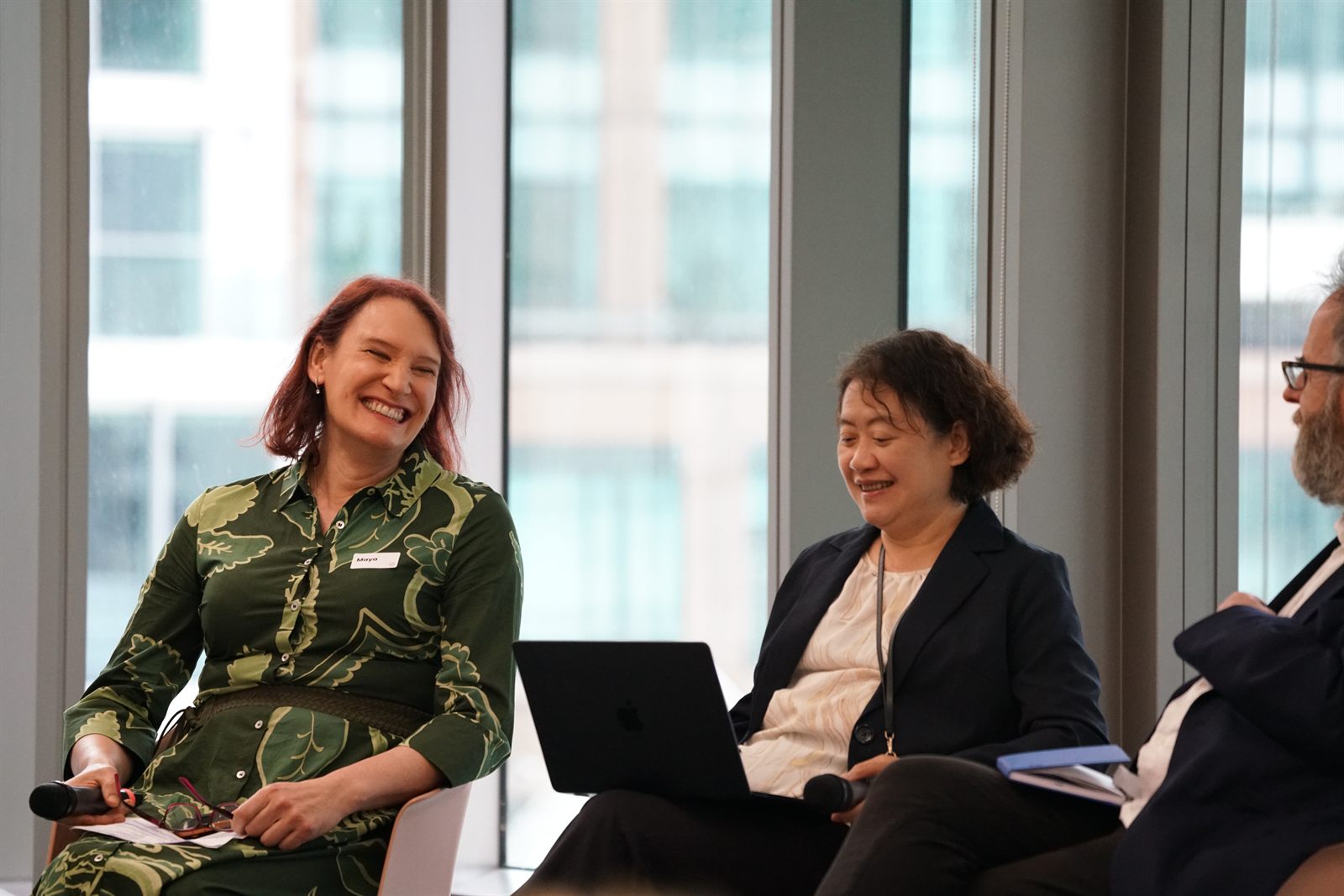
This piece reflects the discussion at Panel 1 of AI Without Borders 2.0, moderated by YJ Chen for Tech London Advocates Taiwan.