


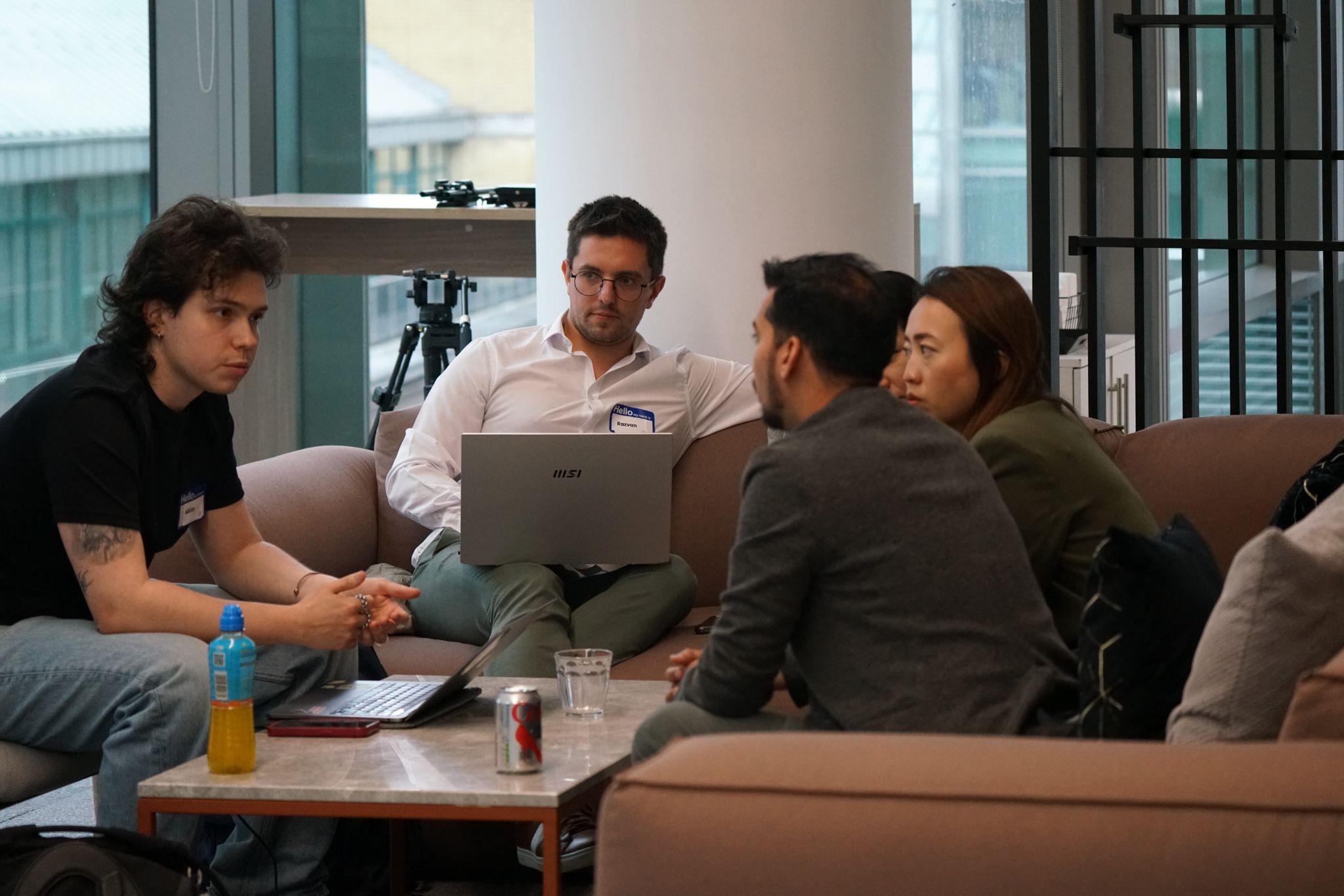
Panels can describe trustworthy AI. The Build Lab asked people to build it before lunch.
Running alongside the main programme at AI Without Borders 2.0, the Build Lab gave each team a single morning to take a problem from idea to working demo. The format was deliberately cross-disciplinary. Every team brought together commercial, technical and creative talent, so that the person framing the customer and the business case sat next to the person writing the code and the person shaping how the product actually looked and felt to use. It is a small constraint with a big effect. It forces a team to defend more than whether their AI works. They also have to show that someone would trust it, pay for it, and want to use it.
The brief picked up the day's central question: how do you build AI that people can actually trust? The answers came back strikingly varied, spanning supply-chain resilience, factory maintenance, hiring fairness and startup due diligence. Yet they shared a common instinct. None of them treated trust as a slogan. Each tried to make it something you can see, measure or prove.
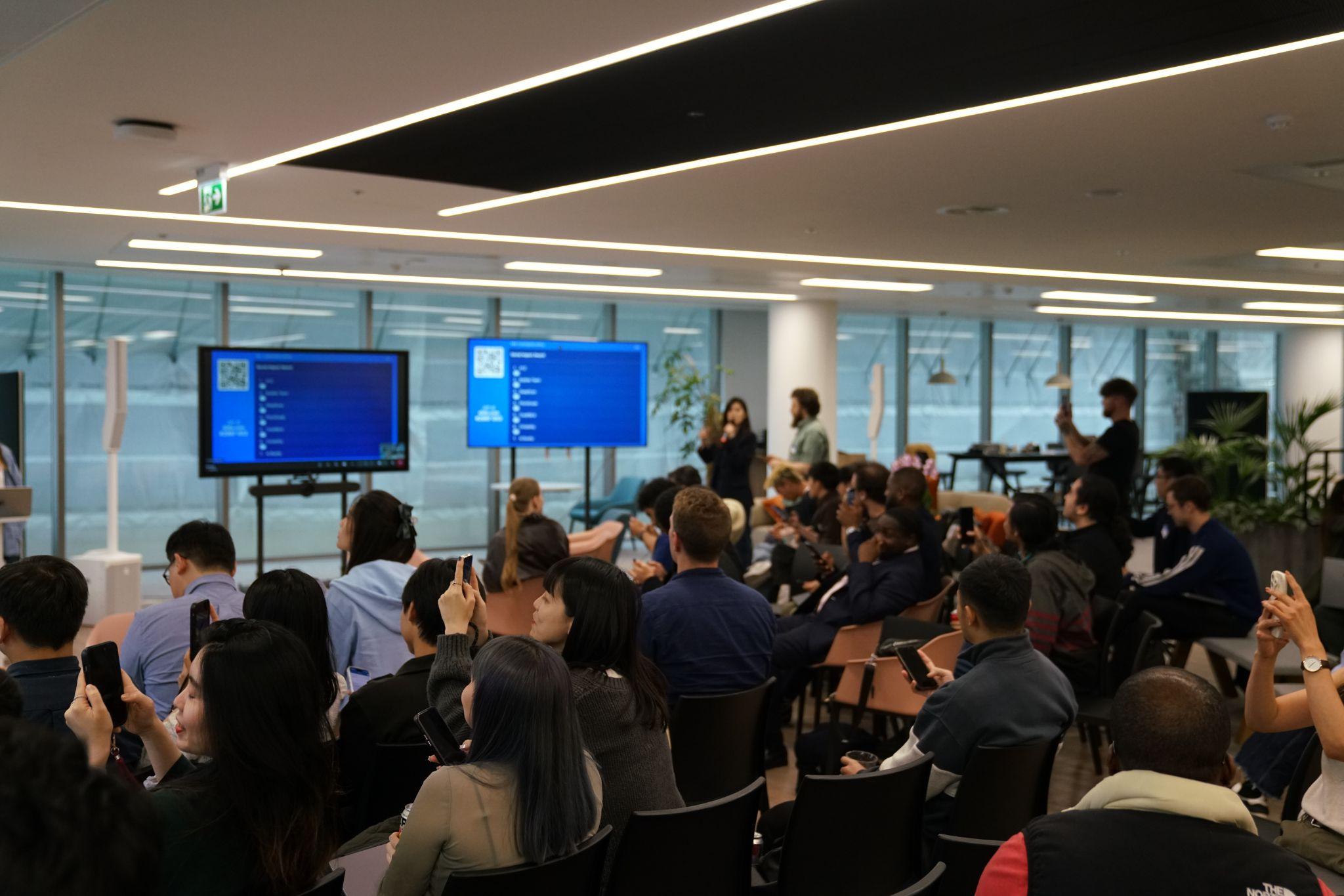
At the end of the session, the room decided. Using a live Slido vote, attendees chose winners in three categories: the Social Impact Award, the Most Trusted Solution Award, and the Ready-to-Build Award. The leaderboard filled in on the big screen as the votes landed, and the contest was closer than the final order suggests.
Social Impact Award: PitchGrade
PitchGrade won the Social Impact Award for tackling a problem most founders feel and few can fix. Market research is slow, and the insight it produces is rarely free of human bias. Their tool helps startups and investors read a company's market position quickly and more objectively. It gives venture investors a sharper way to assess a startup's potential, and it gives founders a way to evaluate themselves before they ever walk into a fundraise. By trying to strip bias out of the earliest and highest-stakes judgements in the funding chain, PitchGrade made a case the room clearly recognised. Fairer information at the start changes who gets backed.
Most Trusted Solution Award: Bubble Team (Disruption Simulator)
The Bubble Team won Most Trusted Solution with the Disruption Simulator and AI Evidence Ledger, a tool built squarely around the day’s theme of accountability. The first half turns supply-chain resilience into two numbers anyone can act on: Time to Survive and Time to Recover. So when a port closes, a plant burns or a supplier is breached, an operator can see straight away whether production stops, and by how many days. The second half is where the tool earns its name. Every AI recommendation, and every human decision to accept or override it, is written to a tamper-evident ledger secured with SHA-256 hash chaining. Alter a single record and the chain visibly breaks. As the team put it, “the AI recommended it” is not a defence you can take to an auditor, so they built the proof layer that makes AI-assisted decisions defensible to regulators, insurers and the board.
Ready-to-Build Award: Trust AI
Trust AI won the Ready-to-Build Award with FactoryTrust AI, a predictive-maintenance system for a small manufacturing floor that looked closest to something you could deploy on Monday. It trains a model on real equipment-failure data to flag which machines are heading for trouble, then wraps that prediction in the things a factory would actually need to trust it: a clear machine-health status, an explanation of why each alert fired, a human approval-and-audit step, and impact tracking to show what the system saved. It was a neat embodiment of the morning’s argument, that the gap holding AI back is no longer raw capability but dependable, accountable deployment.
The rest of the field
The three winners led a strong field. CreditBird, which finished joint-second with Trust AI in the Ready-to-Build vote, produced one of the slickest outputs of the morning: a dashboard that follows a single prompt through its token count, dollar cost and carbon footprint, then coaches you to make it leaner. The insight underneath it fit the day perfectly. The same prompt costs more tokens, money and energy in some languages than others, so the economics of AI are not borderless at all.
CVisibility built a counterfactual fairness audit for AI recruiters, holding a CV constant and changing a single identity signal, such as a name, an age or a school, to measure whether the verdict moves, then returning a fairness score with the evidence behind it. DeepScan and Team XYZ rounded out the morning with takes on document scanning and privacy-preserving generative AI. AI Buddy also presented, with a tool that breaks a personal problem down by life stage to avoid applying one group’s advice to another. Different problems, but one shared reflex: build the thing, then show your working.
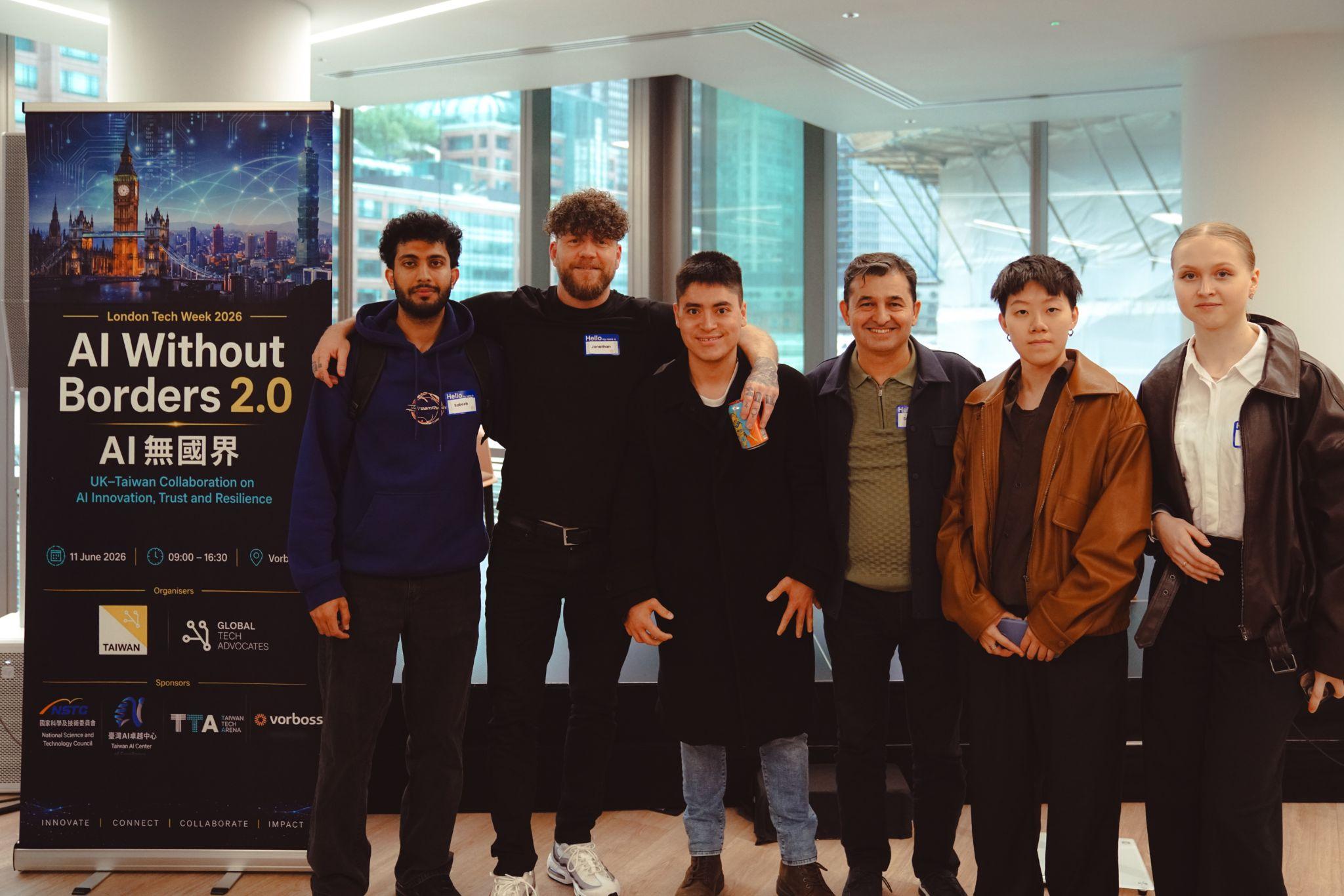
If the panels asked whether the UK and Taiwan can build AI worth trusting, the Build Lab answered in the only language that really settles it: a working demo, judged by the people in the room. Trust, as one founder reminded us elsewhere in the day, is not a promise you make once. It is something you operate every single day. The builders took that literally, and they shipped.
The Build Lab ran as part of AI Without Borders 2.0, hosted by Tech London Advocates Taiwan in London. Winners were selected by live audience vote.