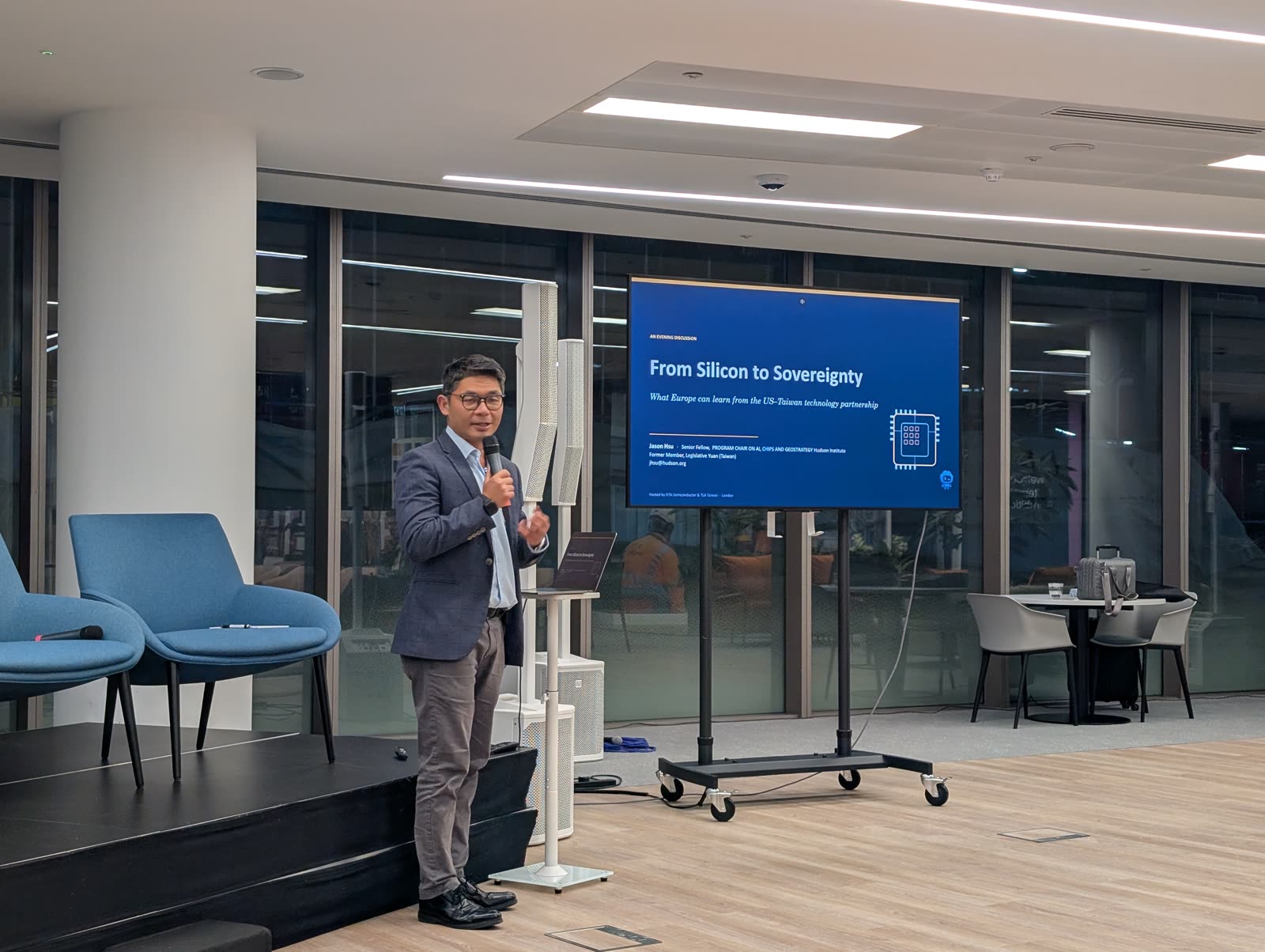
The evening was convened by Josh Liu, lead and founder of the GTA Semiconductor Working Group, who spotted that a keynote worth hearing was passing through London and built an evening around it. It opened on arithmetic. Taiwanese industry has committed around USD 250 billion of investment into the United States, and Taiwan’s government has matched it. The EU Chips Act put up less than fifty. The UK and Europe have said they intend to be the third player after the US and Taiwan, but the two figures are not in the same league. Nobody in the room expected the UK to outspend that. The question was what it could do instead.
The question behind sovereignty
Jason Hsu, senior fellow at the Hudson Institute and a member of Taiwan’s Legislative Yuan from 2016 to 2020, argued that “sovereign AI” has become shorthand that hides more than it explains. Chips alone get you nowhere. You also need fabrication, packaging, servers, energy, inference, data and talent. Sovereignty is not owning every layer; it is being able to reach and shape the whole stack on your own terms, including through partners, with confidence that you cannot be cut off.
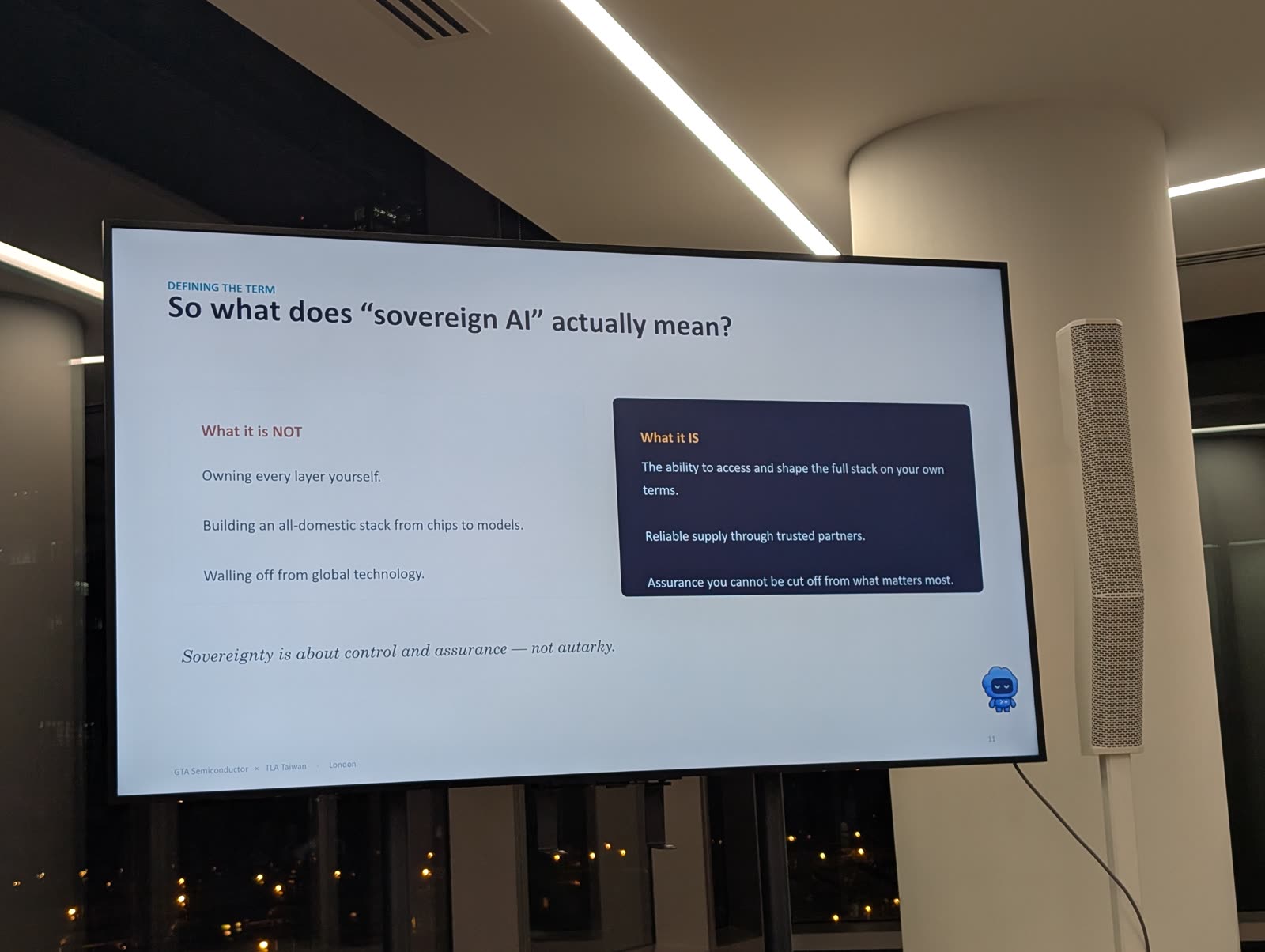
That reframes the question for a government. The useful thing to ask is not what a country owns but what it holds that others cannot do without. Taiwan holds advanced chips, the Netherlands lithography. The UK has not settled on an answer.
There is no shortcut. Every government wants a fab, Hsu said, “but it’s not like just opening a bubble tea shop.” Taiwan’s cluster took four decades of industrial policy, R&D and talent pipeline on an island of 36,000 square kilometres. None of that can be bought quickly.
Interdependence is not dependency
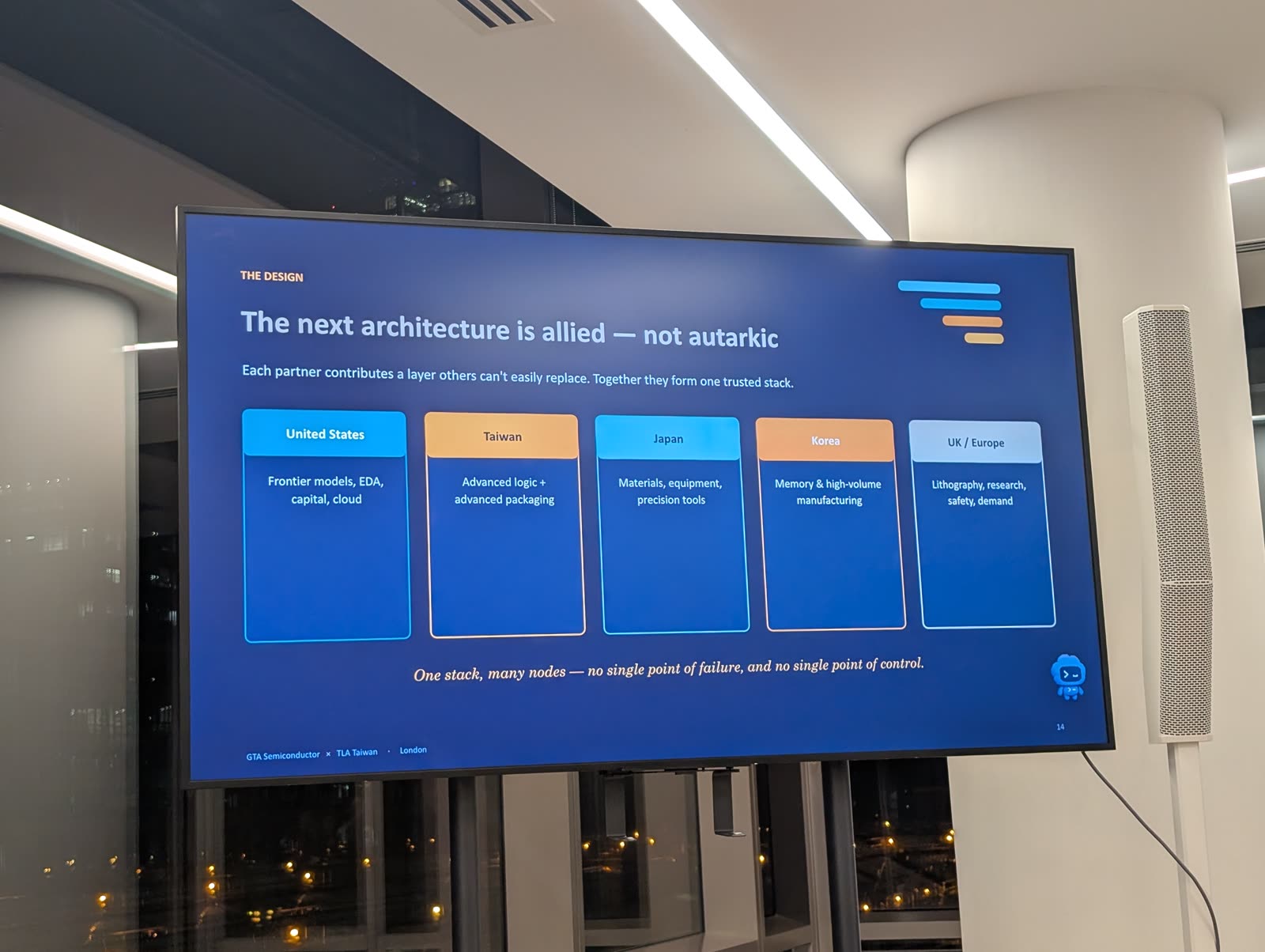
Self-sufficiency, Hsu argued, is autarky, and nobody has achieved it. He proposed trusted interdependence instead: hold a layer others need, so dependence runs both ways and the cost of severing it rises on all sides.
Dr Shyam Krishna, research leader at RAND Europe, took that further in the fireside. “Interdependencies need to be understood differently from dependency,” he said. “Dependency is tricky to solve. Interdependence can be useful.” Sovereignty, on his reading, is strategic capacity in chosen areas rather than ownership, and he defined it as being ready for whatever comes next, which puts it closer to resilience than to independence.
On Europe’s execution he was more direct. It keeps stimulating demand for chips it has no access to while the supply question goes unresolved, and the compliance calendar of the AI Act, the Cyber Resilience Act and DORA leaves firms unsure which timeline governs them before they have even found the applications.
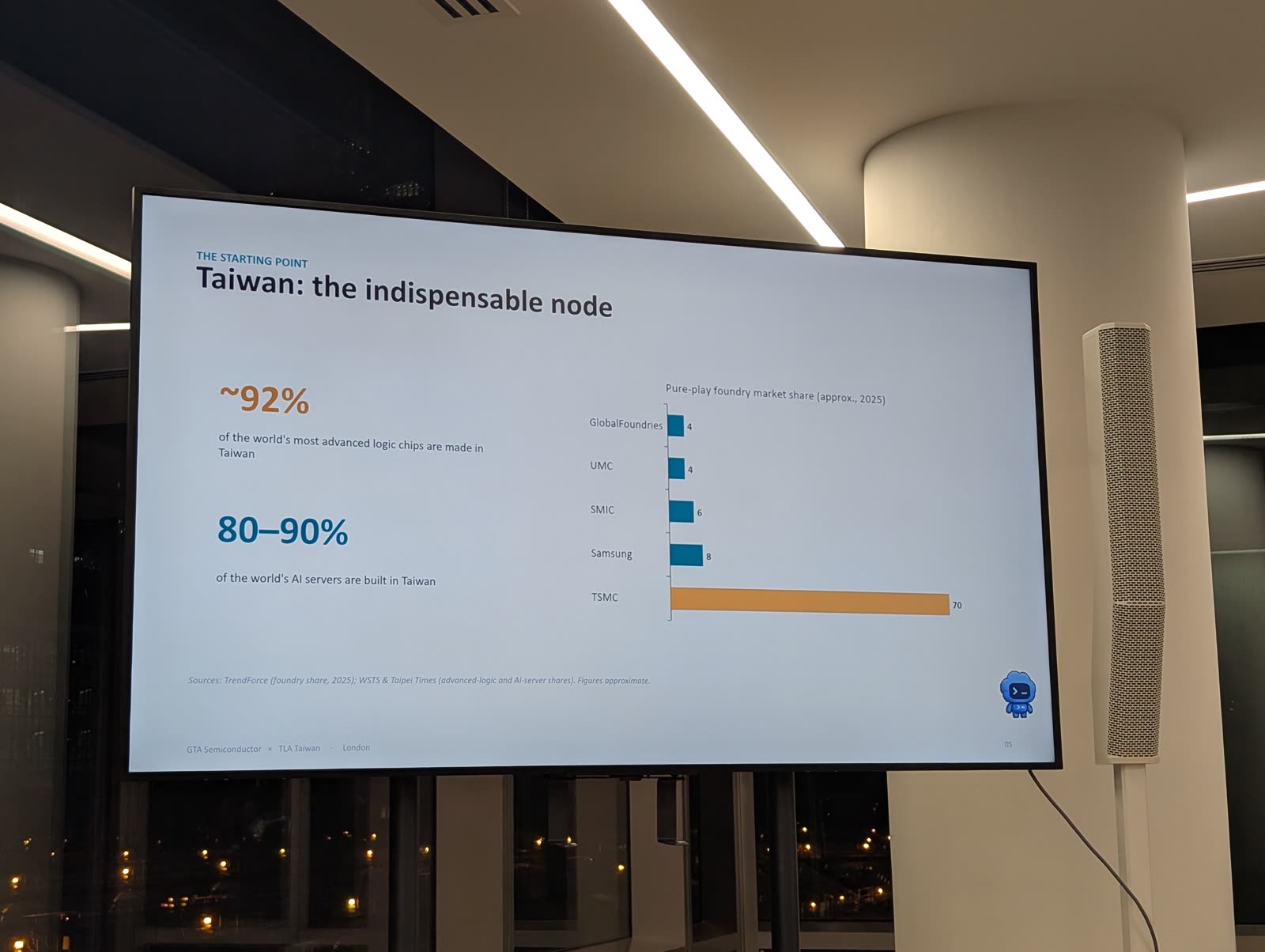
Taiwan’s own exposure was treated the same way. The silicon shield theory, that Taiwan’s centrality in advanced chips is itself a form of protection, is an oversimplification, and concentration of that degree carries risk in its own right. In any serious interruption to shipping from the island, global supply stops within about a week. Taiwan’s answers are diversification, redundancy, and shared rather than solely owned capacity, since shared dependence raises the cost of disruption for everyone. Europe has been slower to build that redundancy. TSMC has six fabs under way in Arizona and one in Dresden, which has taken considerably longer to reach construction. The company can build in eighteen months; European timelines have run to more than that before ground is broken.
The UK inventory
Dr Andy G Sellars, strategy director at CORNERSTONE, founder of the Compound Semiconductor Applications Catapult and a member of the government’s semiconductor advisory panel, went through what the UK actually has. A strong research base, strong materials, real strength in compound semiconductors. Roughly 160 chip design companies. Quantum research second or third in the world. Tool vendors that lead in their niches, Oxford Instruments and KLA among them. More startups than anywhere outside the United States.
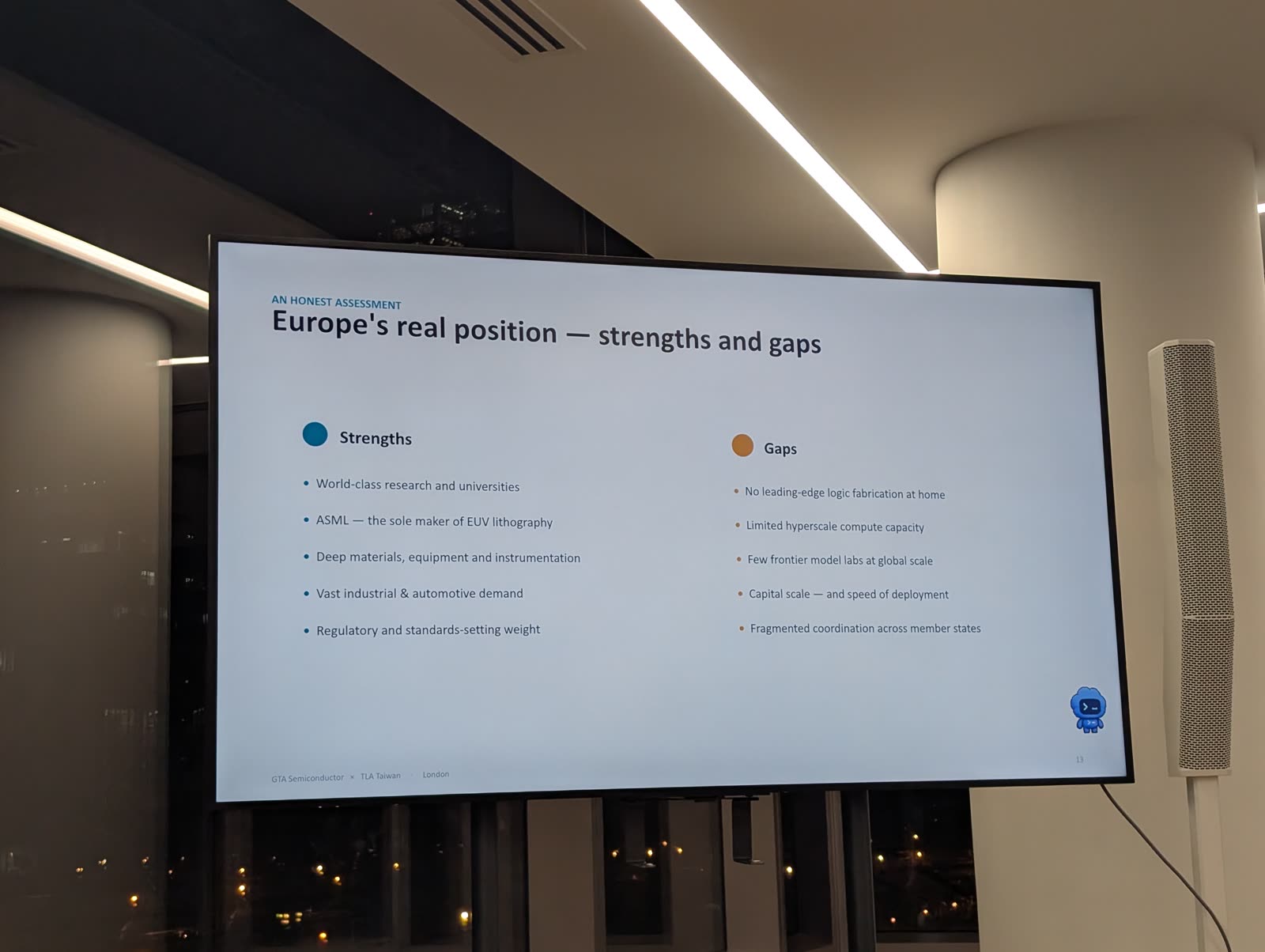
The problem comes further down the line. The UK invents, takes things to the edge of commercialisation, then sells or loses them. Sellars added a point about tempo. A national semiconductor review reported, the political cycle turned, and the work began again from the start. He was careful to say this was not a criticism of the process, but the momentum went. A photonics line in Singapore has meanwhile been running two or three years with a matured process and a customer pipeline. Once a competitor is that far ahead, catching up is very hard.
Where the UK could put its weight
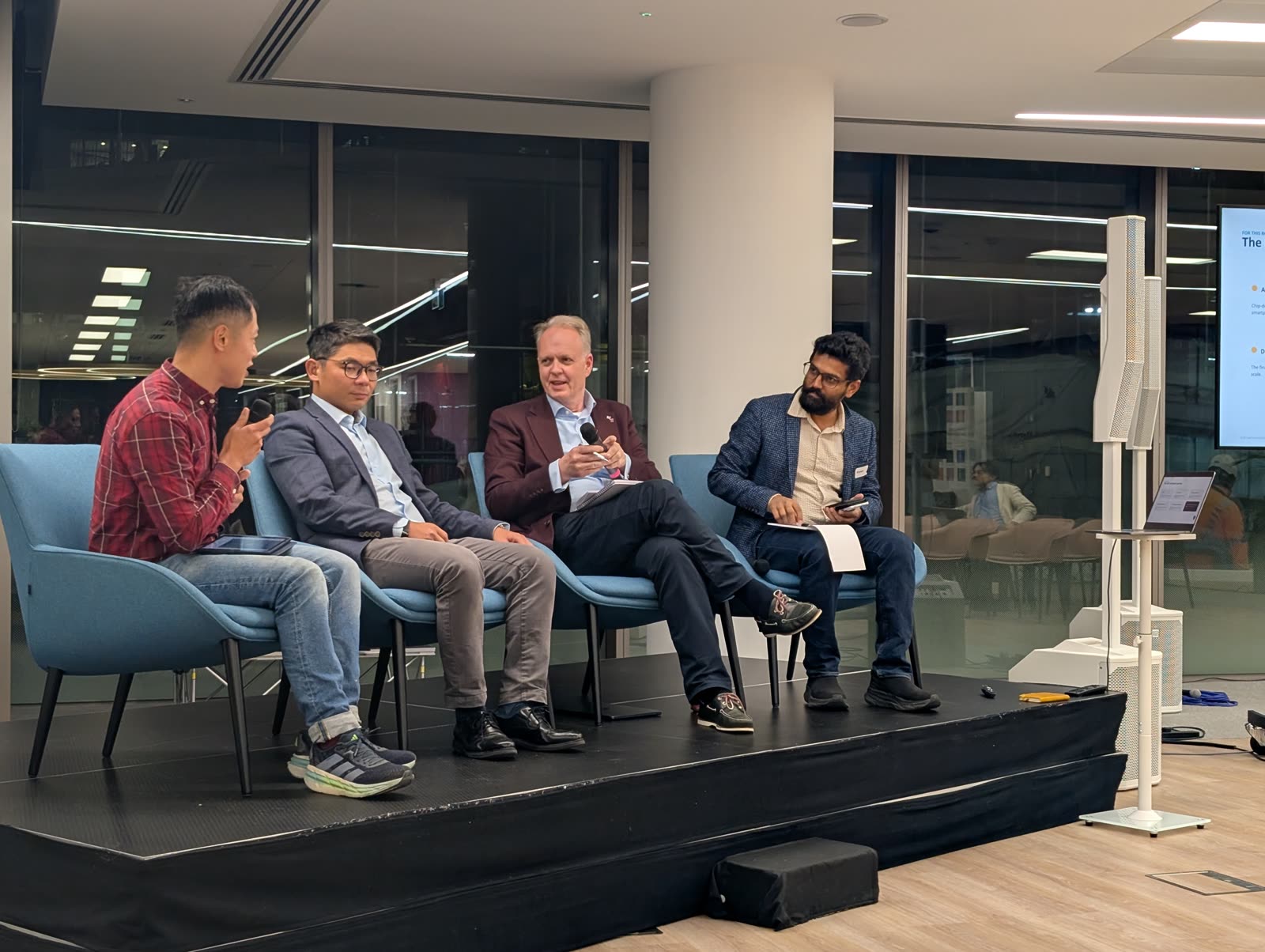
Four proposals came out of the keynote, the fireside and the floor.
Own a domain. Taiwan’s is manufacturing: decades of process data that frontier labs have offered to pay a premium to train on, and been refused. Nobody in the room could name the UK equivalent, which makes it a fair question for the next round of industrial strategy.
Make it fast to build here. A strategic zone with fast-track permitting, tax incentives, talent visas and subsidy, aimed as much at the smaller suppliers being squeezed by rising build costs as at the large manufacturers. Then TSMC’s joint venture model: in Japan, Sony pre-ordered capacity two years out and helped fund the fab. The UK has the anchor industries, automotive and aerospace, to make the same offer, and a committed domestic customer is worth more to a foundry than a subsidy is.
Go after edge inference. Frontier models are becoming expensive and most tasks do not need them. Hsu and Sellars both landed on inference at the edge: on-device, power-constrained, and far easier to enter than cloud training. Krishna’s version was small, constrained, open-weight models running inside an enterprise boundary, which is also the class of system the UK and EU are best placed to govern. One further idea worth chasing was tokens as a service: telecoms and large national players supplying AI capacity to domestic industry as a utility. And as international student routes tighten elsewhere, competing harder for that talent is the cheapest item on the list.
Scale photonics with a partner. Sellars’ proposal was the most concrete of the night. Photonics is at the point electronics reached sixty years ago, an optical bench collapsing onto a single chip. The UK can de-risk a process to hundreds of thousands of units; a partner like TSMC turns that into billions. The same logic surfaced from the floor for other sectors: build with partners close to where the capacity is needed, rather than holding the whole line alone.
The gap worth owning
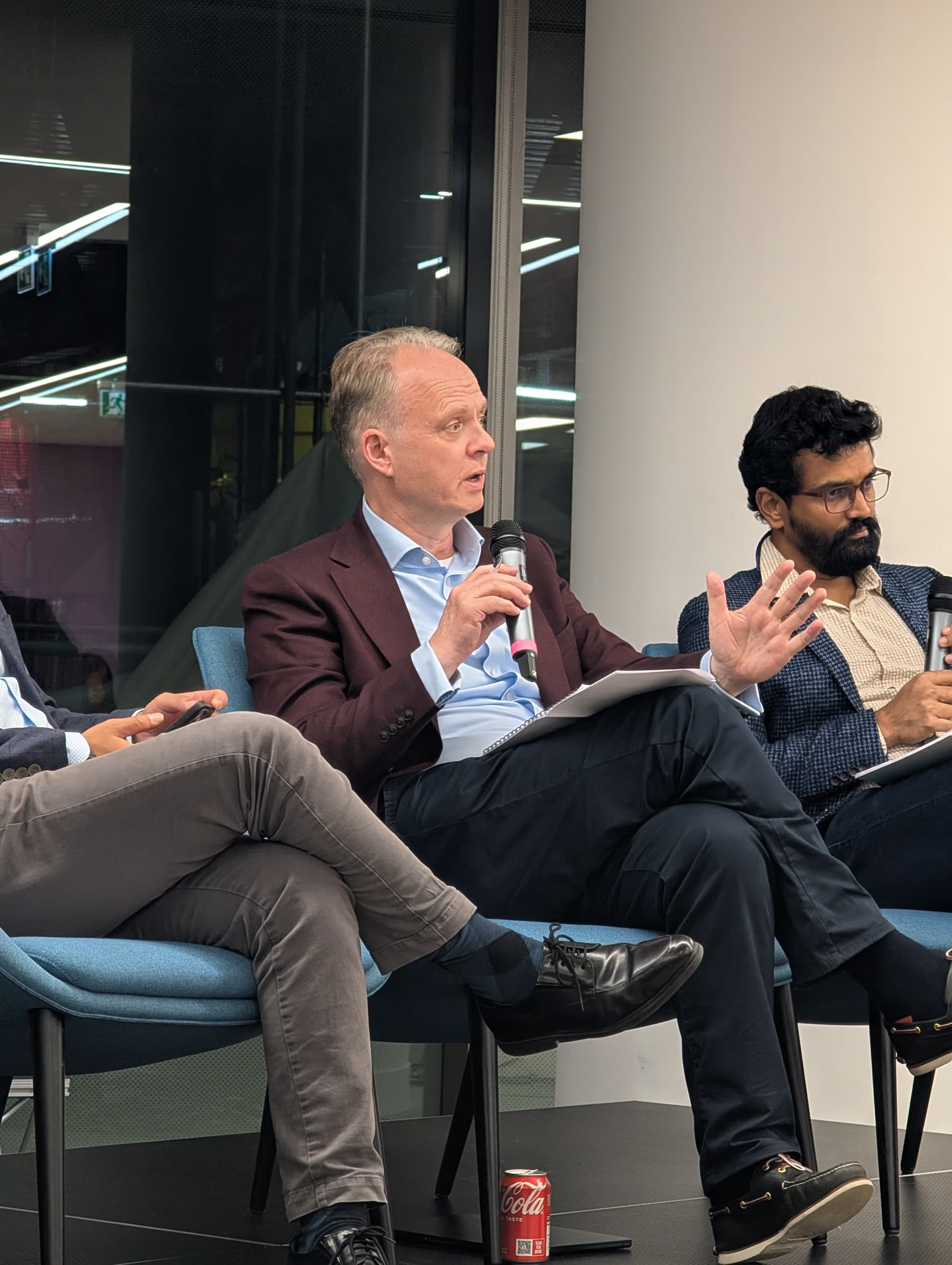
The closing exchange on AI safety came back to sovereignty from another direction. The UK has moved the needle on safety, risk mapping and security research, while the US has moved faster on capability, driven largely by commercial competition. What nobody has done is the fundamental work on AI inside critical national infrastructure, a question now being answered in deployments before it has been answered in research. There are no agreed red lines and no agreed tests for severity or criticality.
That is a gap the UK is well placed to fill, and it fits the definition of sovereignty the room arrived at: not owning every layer, which nobody does, but holding the layer where a capability gets proved before the rest of the world comes to depend on it.
From Silicon to Sovereign AI was convened and organised by Josh Liu, lead and founder of the GTA Semiconductor Working Group, and held at Vorboss on 9 September 2026. The working group unites corporates, investors, policymakers and innovators to advance the semiconductor industry globally; Liu’s Semi Ventures bridges Taiwan’s semiconductor supply chain with industry across EMEA. Tech London Advocates Taiwan was glad to support the evening as co-host. Our thanks to Josh Liu and the volunteers who made it happen, and to Vorboss for the venue.